Jordan Peterson on the Gulag Archipelago
Peterson calls Solzhenitsyn's record of the Soviet camps the most important book of the twentieth century — not as history, but as a moral examination conducted from inside the catastrophe. The question it forces is not what they did, but what you would have done.
Jordan Peterson calls The Gulag Archipelago one of the most important books of the twentieth century. He has said that reading it changed him. The Soviet labor-camp system killed millions — estimates range into the tens of millions depending on what deaths are counted — and Aleksandr Solzhenitsyn's achievement was to make the moral mechanism of that catastrophe legible. The question was not "how could monsters do this," but "how could ordinary people." This essay traces both the history Solzhenitsyn documented and the moral lesson Peterson extracts from it: that the capacity for atrocity is not located in a distant category of evildoers, but distributed through every human heart, including your own.
The book that changed him
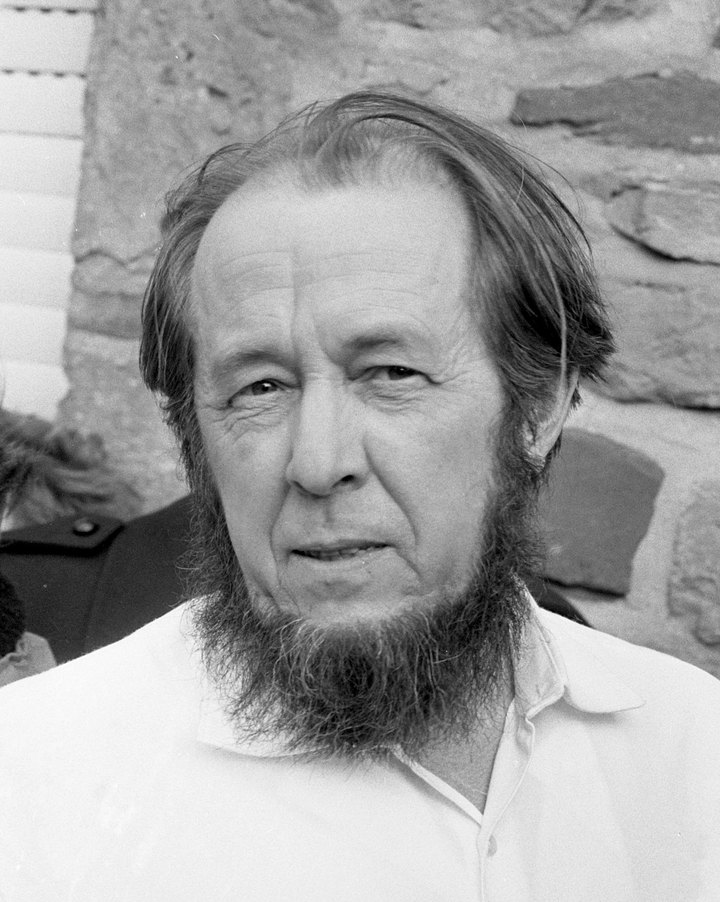
Solzhenitsyn was himself a zek — a prisoner of the camps. He wrote The Gulag Archipelago in secret, assembling it from testimony smuggled out by survivors, hiding manuscript pages, risking his life for years. When it was published in the West in 1973, its effect was seismic: it demolished what remained of Western intellectual sympathy for Soviet communism. You could no longer claim ignorance. Peterson frames the book not as history in the conventional sense, but as a moral examination conducted from inside the catastrophe itself. It is a reckoning with what human beings are capable of when ideology replaces conscience, and when the individual is subordinated to the abstraction. Solzhenitsyn's method was not to write from the position of the judge, but from that of the implicated — a man asking what he himself might have done.
The archipelago
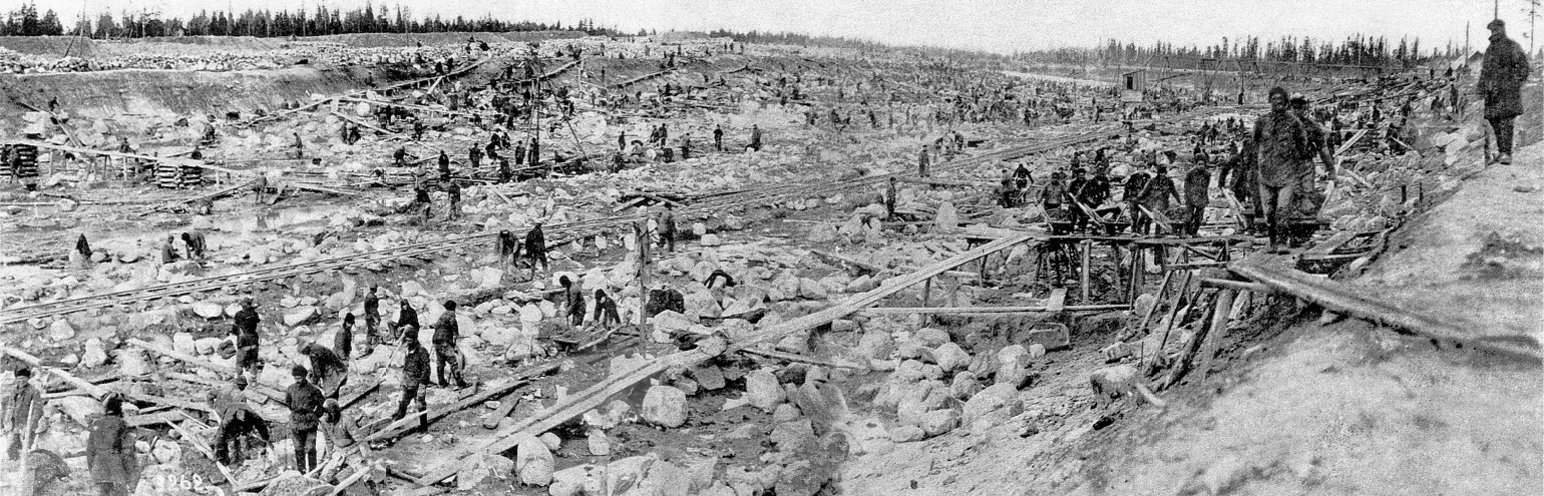
Solzhenitsyn called it an "archipelago" because the camps were scattered across the Soviet landmass like a chain of islands — a secret country inside the country. The system ran roughly from 1918 into the 1950s. Tens of millions passed through the camps; deaths are counted in the millions to tens of millions, depending on what you include: executions, starvation, disease, forced labor, exposure. The camps were not merely punitive; they were a slave-labor economy integral to Soviet industrialization. Prisoners built canals, mined gold, felled timber in the Arctic. The geography was one of deliberate cruelty: camps placed in the coldest, most remote regions, where survival itself was unlikely. This was suffering at industrial scale, methodically organized and bureaucratically managed.
How ordinary people made it
This is the heart of Peterson's reading. The Gulag was not built by a handful of psychopaths at the top. It required millions of ordinary participants: the neighbor who denounced, the guard who followed orders, the bureaucrat who signed the transport papers, the citizen who looked away. Solzhenitsyn's unbearable insight, the one Peterson returns to again and again, is that Solzhenitsyn asks what he would have done — and concludes that he, too, might have been a perpetrator. Peterson's repeated admonition: do not flatter yourself that you would have been the hero. The statistical likelihood is that you would have been a guard, or an informer, or silent. The honest moral reckoning begins with the recognition that the capacity for complicity is in you. Peterson says we are "each and all of us tainted" — we are "all possessed by the attributes of the Auschwitz guard, the Gulag trustee, the willingness to turn away and to consciously deceive and the capacity to delight in oppression and cruelty." The danger lies not in acknowledging this, but in denying it.
"The line between good and evil"
The single most-quoted passage from Solzhenitsyn, and Peterson's touchstone, is this: the line dividing good and evil cuts not between states, not between classes, not between political parties, but through every human heart. Every human heart. Peterson's gloss: this is why the shadow matters, why individual moral responsibility matters, why the search for an external enemy to blame is the beginning of atrocity. Evil is not "them." Evil is a potential in everyone, waiting for the right conditions — fear, resentment, ideology — to be activated. The moment you locate malevolence entirely outside yourself, you grant yourself moral license. And moral license, combined with power, is the precondition for mass murder. Solzhenitsyn's directive is to confront the adversary within, not because it is easy or pleasant, but because the alternative is to become the sort of person who builds camps.
Ideology as the engine
Peterson's diagnosis of the mechanism is ideological. Utopian ideology — the claim that a perfect future justifies any present means, that a class or category of people is the source of all suffering and can be eliminated — converts ordinary resentment into industrial-scale killing. The Gulag is what happens when you take an abstraction more seriously than the individual human being in front of you. The revolution, the proletariat, the radiant future — these are ideas. The man you're starving to death is real. But the ideology insists that the abstraction matters more. Peterson warns that this structure recurs: whenever a movement identifies a category of people as the obstacle to utopia, the logic of elimination follows. It is not a uniquely Soviet problem. It is a recurring human temptation, and it appears whenever we allow the dream of a perfected world to override our obligation to the person standing in front of us.
The individual lesson
What Peterson tells his students to take from Solzhenitsyn is not, primarily, a political program. It is a personal one. Clean up your own life before you attempt to reorganize society. Tell the truth, because the Gulag ran on lies — lies about production quotas, lies about guilt, lies about the camps themselves — and Solzhenitsyn's prescription was "live not by lies." Take responsibility for the evil you are capable of, because the people who built the camps were the ones who refused to. Peterson insists that the most consequential political act available to an individual is to refuse to participate in the lie. That refusal is costly; it can cost you your career, your freedom, your life. But it is the one act that cannot be co-opted by the machinery of atrocity. The person who tells the truth when everyone around him is lying does not stop the machine — but he refuses to be its fuel. And that, Peterson argues, is where defense against totalitarianism begins: not in legislation, but in the decision made by one person, in one moment, to say what is true.
The memory, buried again
Solzhenitsyn's deepest fear was not only that the camps had existed, but that a nation might decline to remember what it had done. That fear has proven well founded. In November 2024, Russian authorities closed Moscow's Gulag History Museum, citing fire-safety violations; in January 2025 its long-serving director, Roman Romanov, was dismissed. The institution that had documented the camps for the public is to be replaced by an exhibition on Nazi crimes against the Soviet people — the suffering quietly relocated from a wound the state inflicted to one it endured. Memorial, the organization founded in the Soviet twilight by dissidents including the physicist Andrei Sakharov to record the names of the repressed, was ordered liquidated in 2021 and later designated an “undesirable organization,” making the work of remembrance itself a crime. Peterson's reading gains a grim second life here: the capacity that built the archipelago did not die with Stalin, and neither did the impulse to bury the evidence. To erase the memory of an atrocity is to prepare the ground for its repetition — which is precisely why Solzhenitsyn insisted that telling the truth, naming what happened, refusing the official lie, is not a historical courtesy but a present defense.
The Gulag is not a museum piece. Peterson's insistence is that the capacity that built it is permanent, distributed, and personal — and therefore the defense against it is also personal. Read the book, he says. It is long, and it is brutal, and it is necessary. Because the question Solzhenitsyn forces you to answer is not what they did, but what you would do. And the only honest answer begins with the possibility that you, too, could have been complicit.